
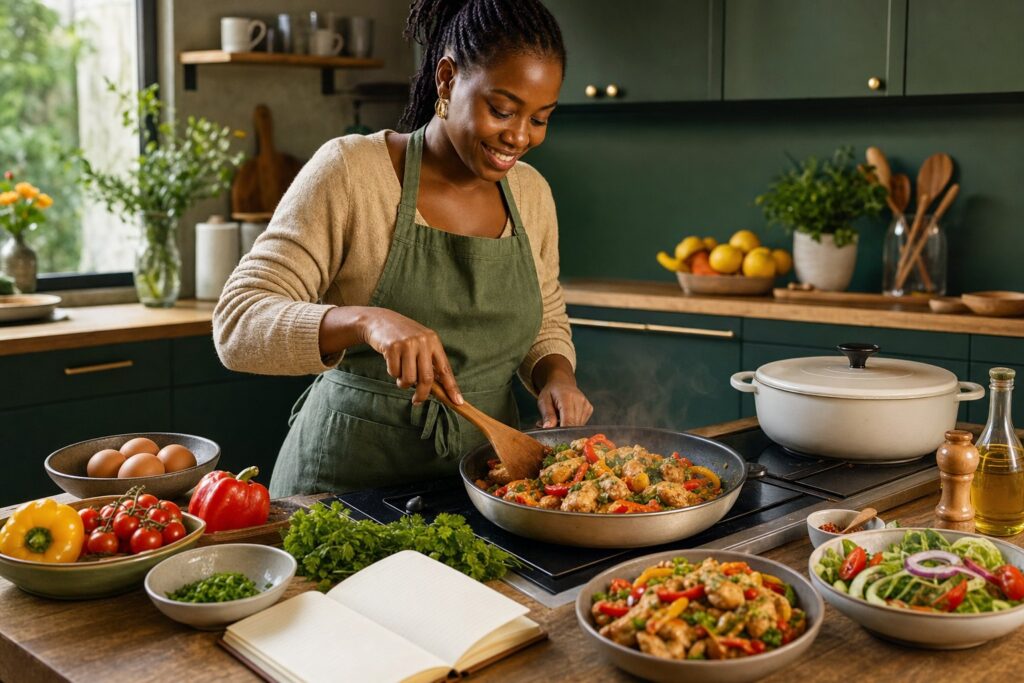
Food earns a place in daily life by being useful. A product may look appealing on a shelf, but households and professional cooks also need to know how it can fit breakfast, lunch, dinner, celebrations, and busy working days. OTAFRESH is being designed around that practical reality, with chicken and eggs presented as flexible ingredients rather than abstract brand promises.
Recipes are one part of that approach. The OTAFRESH recipe collection uses familiar ingredients and straightforward methods, from tomato chicken stew and herb-roasted chicken to vegetable omelettes and quick rice dishes. Each recipe gives preparation time, cooking time, servings, ingredients, and ordered steps so a visitor can decide whether it suits the time, equipment, and ingredients available.
Useful content also means being honest about variation. Home kitchens differ, ovens and stoves behave differently, and pack formats may change by retailer. Our guidance therefore supports confident preparation without pretending every household has the same tools or every shop carries the same format. Where a fact depends on a verified product label or operating process, it will be added only after confirmation.
The same principle applies to professional kitchens. Restaurants, caterers, hotels, and institutions often plan around consistency, storage, preparation time, and purchasing needs. OTAFRESH content can help start those conversations, but detailed commercial information must come from the responsible team. Clear routes to partnership and contact are included so businesses can share their actual requirements.
Real life is varied, and useful food communication should respect that. By combining practical recipes, understandable product pages, and routes to local support, OTAFRESH aims to help people move from browsing to planning a meal. The result should feel less like advertising and more like a reliable kitchen companion that continues to improve with verified information.